It's Tuesday again!!! This weeks theme is Yellow Yellow.
It's been very cold here in Iowa, and the theme here is Snow, Snow, and more Snow! Spring is what I'm dreaming of now, daffodils, tulips and more are what I'm wishing to see.
Tuesday, February 19, 2008

Friday, February 15, 2008
New Ideas
This weeks challenge has really got me going, I have all sorts of new ideas to incorporate with my rust dyeing.
I'll try to get some photos posted to my regular blog later today! Mixing medias is one of my passions when it comes to surface design, building rich and layered surfaces is a must in my studio. If you've ever wondered how those other artists created those pieces then stand back a momment and take a really good look. Now start counting the layers! That's right layers, it may not be evident at first blush but every master piece I've ever seen was built up in a series of layers. That's the secret!!!
Now back to my regularly scheduled studio time ;-)
I'll try to get some photos posted to my regular blog later today! Mixing medias is one of my passions when it comes to surface design, building rich and layered surfaces is a must in my studio. If you've ever wondered how those other artists created those pieces then stand back a momment and take a really good look. Now start counting the layers! That's right layers, it may not be evident at first blush but every master piece I've ever seen was built up in a series of layers. That's the secret!!!
Now back to my regularly scheduled studio time ;-)
Tuesday, February 12, 2008
Feb 12th Challenge
Spring - Sprouting New Ideas
Remember you need to use one natural surface technique in your piece, your free to interpet this anyway you wish.
Remember you need to use one natural surface technique in your piece, your free to interpet this anyway you wish.
Tuesday Challenge

I will post my pictures, I am temporarily without camera. If you have a piece you've finished for this week's challenge email me and I'll get it posted here and to the flickr folder.
Mean while this is the new logo for the challenge, I'll try to get a link created as well.
Sunday, February 10, 2008
Flickr Album
I created an album for myself on Flickr, I'm putting my natural dyed fabrics and fibers in there, amongst other things. I didn't realize how busy I've been the last few years until I started going through my pics! Makes me want for warmer temperatures right now.
http://www.flickr.com/photos/kbaxterpackwood/
I have several thousand other photos to upload so it's going to take awhile to do all of this! ;-)
http://www.flickr.com/photos/kbaxterpackwood/
I have several thousand other photos to upload so it's going to take awhile to do all of this! ;-)
Tuesday, February 05, 2008
Feb 5th Challenge
Rust and Red, since Valentines is coming up! This could be interesting! See rusting primer below two posts down.
Natural Surfaces Challenge
The Natural Surfaces Challenge:
You don't have to be a member of the group in order to participate but it might be easier if you want to be kept in the loop.
Each Tuesday I will post a new challenge topic, challenge pieces are due the following Tuesday:
Requirements are:
At least one natural technique must be used in your process: 18" x 24" to 1 Yard pieces of fabric or paper.
Yes you can combine paper and fabrics together.
You can join the group here: http://groups.yahoo.com/group/Natural_Surfaces
Natural Processes (And I may add to this list later):
Natural Dyeing
Rust Dyeing
Compost Dyeing
Iron Oxides
Clay Dyeing
Pigment Painting
Encaustic
Participants need to submit a web ready image of their images, along with process information, your name, website/blog link.
You don't have to be a member of the group in order to participate but it might be easier if you want to be kept in the loop.
Each Tuesday I will post a new challenge topic, challenge pieces are due the following Tuesday:
Requirements are:
At least one natural technique must be used in your process: 18" x 24" to 1 Yard pieces of fabric or paper.
Yes you can combine paper and fabrics together.
You can join the group here: http://groups.yahoo.com/group/Natural_Surfaces
Natural Processes (And I may add to this list later):
Natural Dyeing
Rust Dyeing
Compost Dyeing
Iron Oxides
Clay Dyeing
Pigment Painting
Encaustic
Participants need to submit a web ready image of their images, along with process information, your name, website/blog link.
Friday, January 12, 2007
Wednesday, October 25, 2006
Rust Dyeing a Primer
You can purchase complete directions here Rust and Clay Dyeing DVD
Rust dyeing is a surface design method that adds dimension to your fabrics and fibers. I use the technique predominately on cotton or silk fabrics. Natural fibers take the rust colors better than synthetic fibers.
You can rust dye onto commercially dyed and/or printed fabrics. However, fabrics dyed using synthetic dyes, or those dyed with natural dyes take rust dyeing best as they usually do not have anti-stain coatings on them. When applying rusty objects to naturally dyed fabrics the colors will change. Iron, i.e. rust, is a modifier and is used as a mordant with natural dyes. Modifiers change the existing color via shifts in the pH levels. An example would be hibiscus or cochineal, each yield a red color, when you add iron they shift from red to purple. A minute amount causes this color change.
You can place rusty objects next to wet fabric and acquire rust patterning over time. However, vinegar will speed up the rusting process, it aids in breaking the rust particles free from the object that is rusting. Rusting occurs normally due to oxidation, i.e. contact with the air. Be patient. Rust dyeing with water takes about a week. Using vinegar produces color in less time usually twenty-four hours.
I use straight vinegar and all sorts of rusty objects to acquire my rust dyed patterns. Old nails and wire work well for this technique. Wire can be used for bound resist techniques, especially when wrapping the fabric around a rusty pipe. Or you can simply lay the wire in a loose pattern on the fabric and rust it in that manner.
Pole wrapping and bound resist techniques work well with rust dyeing. Simply wrap your vinegar-saturated fabric around a rusty pole, being careful not to tear the fabric, scrunch and otherwise manipulate the fabric to created patterning.
You can sprinkle iron mordant or iron shavings onto your fabric for other patterning. Iron mordant is preferable to shavings. Shavings are often sharp things that can cut you or the fabric. Metal shavings may be coated in machinery oil which would put unwanted stains onto the fabric.
If you like your rusty pieces and want to push the rust dyeing technique further, rinse the fabric and neutralize it in salt water, rinse it again and then rust the fabric once more. This will help prevent the fabric from rotting through.
Natural rust is an iron oxide. It comes in about ten or more natural colors depending on what it is in the neighboring the iron ore. Wear gloves and a mask when working with it. Iron in this form wants to bind with your hemoglobin blocking all available sites for oxygen, ask me how I know. You can become gravely ill from too much contact with raw iron products. In addition, tolerance to raw iron varies with each person.
You can mix a small amount natural rust with water, I generally use one teaspoon rust to one cup liquid, or with soy milk to paint fabric. Stir well. Let it sit for 24 hours to ensure that all of the color will dissolve. Then apply the rust solution to the fabric. Use a old brush you can dedicate to this kind of project. Natural bristle brushes work best with this technique allowing the liquid to wick up the bristles and not leave a mess on your fabric. Cure the fabric dry for 24 hours. Rinse and neutralize your fabric in a saltwater solution.
When using the rust technique if you want the process to stop you need to neutralize it with a salt-water solution. Dissolve about 1/4 cup salt into four gallons of hot water. I do this in a five-gallon bucket. Soak your fabric in the salt water about fifteen minutes. Wash the fabric using a non-phosphorous soap or a mild color free shampoo.
I teach workshops on rust dyeing, several workshops on natural dyeing and several for clay/pigment dyeing
Rust dyeing is a surface design method that adds dimension to your fabrics and fibers. I use the technique predominately on cotton or silk fabrics. Natural fibers take the rust colors better than synthetic fibers.
You can rust dye onto commercially dyed and/or printed fabrics. However, fabrics dyed using synthetic dyes, or those dyed with natural dyes take rust dyeing best as they usually do not have anti-stain coatings on them. When applying rusty objects to naturally dyed fabrics the colors will change. Iron, i.e. rust, is a modifier and is used as a mordant with natural dyes. Modifiers change the existing color via shifts in the pH levels. An example would be hibiscus or cochineal, each yield a red color, when you add iron they shift from red to purple. A minute amount causes this color change.
You can place rusty objects next to wet fabric and acquire rust patterning over time. However, vinegar will speed up the rusting process, it aids in breaking the rust particles free from the object that is rusting. Rusting occurs normally due to oxidation, i.e. contact with the air. Be patient. Rust dyeing with water takes about a week. Using vinegar produces color in less time usually twenty-four hours.
I use straight vinegar and all sorts of rusty objects to acquire my rust dyed patterns. Old nails and wire work well for this technique. Wire can be used for bound resist techniques, especially when wrapping the fabric around a rusty pipe. Or you can simply lay the wire in a loose pattern on the fabric and rust it in that manner.
Pole wrapping and bound resist techniques work well with rust dyeing. Simply wrap your vinegar-saturated fabric around a rusty pole, being careful not to tear the fabric, scrunch and otherwise manipulate the fabric to created patterning.
You can sprinkle iron mordant or iron shavings onto your fabric for other patterning. Iron mordant is preferable to shavings. Shavings are often sharp things that can cut you or the fabric. Metal shavings may be coated in machinery oil which would put unwanted stains onto the fabric.
If you like your rusty pieces and want to push the rust dyeing technique further, rinse the fabric and neutralize it in salt water, rinse it again and then rust the fabric once more. This will help prevent the fabric from rotting through.
Natural rust is an iron oxide. It comes in about ten or more natural colors depending on what it is in the neighboring the iron ore. Wear gloves and a mask when working with it. Iron in this form wants to bind with your hemoglobin blocking all available sites for oxygen, ask me how I know. You can become gravely ill from too much contact with raw iron products. In addition, tolerance to raw iron varies with each person.
You can mix a small amount natural rust with water, I generally use one teaspoon rust to one cup liquid, or with soy milk to paint fabric. Stir well. Let it sit for 24 hours to ensure that all of the color will dissolve. Then apply the rust solution to the fabric. Use a old brush you can dedicate to this kind of project. Natural bristle brushes work best with this technique allowing the liquid to wick up the bristles and not leave a mess on your fabric. Cure the fabric dry for 24 hours. Rinse and neutralize your fabric in a saltwater solution.
When using the rust technique if you want the process to stop you need to neutralize it with a salt-water solution. Dissolve about 1/4 cup salt into four gallons of hot water. I do this in a five-gallon bucket. Soak your fabric in the salt water about fifteen minutes. Wash the fabric using a non-phosphorous soap or a mild color free shampoo.
I teach workshops on rust dyeing, several workshops on natural dyeing and several for clay/pigment dyeing
Sunday, September 24, 2006
40% Off Business Reduction Sale
40% off Storewide Sale at The Prairie Fibers Company this percentage does not include online classes or artwork.
I'm wanting to get back into my studio and my students (which I dearly miss), and move away from the retail side of the business, I'm selling off my remaining invetory, when it's gone it's gone, so come on by and take a peak. Some one-of items have been further reduced to help move them along to a good home.
Please note that because this is a one woman business orders can be slow in being filled.
Thank you - Kimberly
I'm wanting to get back into my studio and my students (which I dearly miss), and move away from the retail side of the business, I'm selling off my remaining invetory, when it's gone it's gone, so come on by and take a peak. Some one-of items have been further reduced to help move them along to a good home.
Please note that because this is a one woman business orders can be slow in being filled.
Thank you - Kimberly
Saturday, March 04, 2006
Mark Making with Nature Online Class
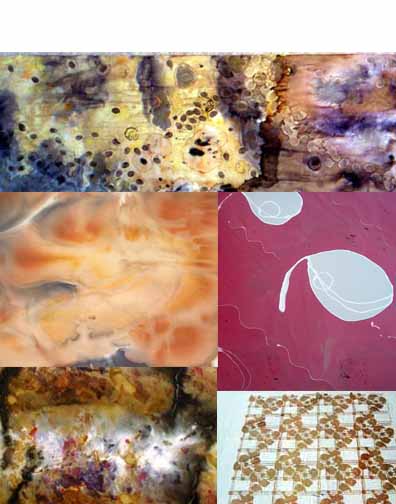
Some samples of work we will be doing in the
Thursday, February 09, 2006
Rust and Clay Dyeing Book on CD
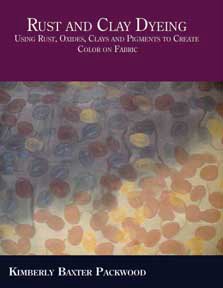
Rust and Clay Dyeing Book available March 1st on CD-ROM. Everything you ever wanted to know about Rust, Iron Oxides, Clays, Ocher's, Pigments and how to use them to acquire color on fabrics, felt, paper and more.
The Book is available at my webstore, click on the title above to follow the active link. Or you can go to: Prairie Fibers Company/
Monday, February 06, 2006
Call for Articles & Artwork
Articles for a new magazine/e-zine. Must pertain to Natural Surfaces in some form or another and comprise 75% of the techniques used to derive said surface.
Natural Surface Techniques include the usage of natural materials on surfaces such as: Natural Dyes, Rust Dyeing, Clay Dyeing, Ochers/Oxides/Pigments. Natural Surfaces may be either flat or dimensional (2D/3D). Other Natural Surfaces include papermaking, felt making, leather work, the use of gut, etc.
Images of Artwork that fit this format are also wanted for the magazine Gallery.
Deadline for articles and artwork: April 1st, 2006
Kimberly
http://www.prairiefibers.com
http://www.kbaxterpackwood.com
http://www.naturalsurfaces.blogspot.com
Natural Surface Techniques include the usage of natural materials on surfaces such as: Natural Dyes, Rust Dyeing, Clay Dyeing, Ochers/Oxides/Pigments. Natural Surfaces may be either flat or dimensional (2D/3D). Other Natural Surfaces include papermaking, felt making, leather work, the use of gut, etc.
Images of Artwork that fit this format are also wanted for the magazine Gallery.
Deadline for articles and artwork: April 1st, 2006
Kimberly
http://www.prairiefibers.com
http://www.kbaxterpackwood.com
http://www.naturalsurfaces.blogspot.com
Natural Surfaces Challenge 1
Natural Surfaces Challenge 1
In order to participate in this challenge you MUST be a member of The Natural Surfaces Yahoo Group for the duration of the challenge.
http://groups.yahoo.com/group/Natural_Surfaces/
Final piece must:
Consist of more than five techniques: Natural Dyeing, Pigments, Clay/Ocher/Oxides, Stitching, Felting, Encaustic, Handmade Paper (which could include paper pulp, silk paper, wool/felt/pulp combination) etc. Yes you can use synthetic paints, and in some instances even synthetic dyes but over all natural techniques should comprise 75% of your final piece.
Size Minimum 18" wide Maxium 36" wide. Length minimum 72" long and the is maxium 108" long.
To make this fair you must be a member of this list and March 1 is the cut off date for joining this Challenge. Maybe I'll even come up with a better name for the challenge. This also gives me time to arrange an exhibition, in real time not just on the internet.
Due date: January 2nd, 2007
I plan to post this in the files section and on my blog:
http://www.naturalsurfaces.blgospot.com
I have expectations of creativity and from what I've seen of members work you guys are definately up to the challenge.
You can make more than one piece but I reserve the right to limit your final piece(s) depending on the number of participants. If there are only a few of us then you can enter more pieces.
Kimberly
http://www.prairiefibers.com
http://www.kbaxterpackwood.com
In order to participate in this challenge you MUST be a member of The Natural Surfaces Yahoo Group for the duration of the challenge.
http://groups.yahoo.com/group/Natural_Surfaces/
Final piece must:
Consist of more than five techniques: Natural Dyeing, Pigments, Clay/Ocher/Oxides, Stitching, Felting, Encaustic, Handmade Paper (which could include paper pulp, silk paper, wool/felt/pulp combination) etc. Yes you can use synthetic paints, and in some instances even synthetic dyes but over all natural techniques should comprise 75% of your final piece.
Size Minimum 18" wide Maxium 36" wide. Length minimum 72" long and the is maxium 108" long.
To make this fair you must be a member of this list and March 1 is the cut off date for joining this Challenge. Maybe I'll even come up with a better name for the challenge. This also gives me time to arrange an exhibition, in real time not just on the internet.
Due date: January 2nd, 2007
I plan to post this in the files section and on my blog:
http://www.naturalsurfaces.blgospot.com
I have expectations of creativity and from what I've seen of members work you guys are definately up to the challenge.
You can make more than one piece but I reserve the right to limit your final piece(s) depending on the number of participants. If there are only a few of us then you can enter more pieces.
Kimberly
http://www.prairiefibers.com
http://www.kbaxterpackwood.com
Sunday, January 15, 2006
Natural Surfaces Web Ring
I'll get it figure out in a bit, until then you can click on the ring code to the right and join there.
Smaller Image

The smaller image makes uploading faster, and doesn't mess up the blog space, once I get the open table tag figured out, that's hogging the entire thing, I'll post the new and improved blog ring!
To Join the Web Ring
Either click on this messages title as it's hot linked, or cut and paste this addy into your browser.
http://www.ringsurf.com/netring?ring=kbaxterpackwood;action=addform
http://www.ringsurf.com/netring?ring=kbaxterpackwood;action=addform
Saturday, January 14, 2006
Logo Button

If anyone knows how to get the picture onto the webring button that'd be great. I did the upload at Ringsurf, where I got the ring, but I'm not sure how to get the picture to show up.
More Info
I started a new webring today. It can go on your website or blog/web journal it's a means to connect natural dyers and surface designers.
Kimberly
http://www.prairiefibers.com
http://www.kbaxterpackwood.com
http://www.prairiefibers.blogspot.com
Kimberly
http://www.prairiefibers.com
http://www.kbaxterpackwood.com
http://www.prairiefibers.blogspot.com
Subscribe to:
Posts (Atom)